


For project owners, the greatest risks in design and construction are rarely about aesthetics or individual technologies. They are about cost certainty, schedule reliability, decision-making clarity, and long-term asset value. Virtual Design and Construction (VDC), when leveraging integrated digital technologies, VDC has become one of the most effective tools owners can use to alleviate these risks and improve outcomes across the full lifecycle of a project.
Originally, VDC was viewed primarily as a design visualization tool—an advanced way to see a project before it was built. Today, it has evolved into a strategic management framework that helps owners align design intent, construction execution, and operational performance around shared objectives.
Moving From Information Silos to Informed Decisions
Traditional project delivery often relies on fragmented information. Design teams create drawings, contractors develop schedules, and cost estimates live in separate systems. For owners, this fragmentation makes it difficult to evaluate trade-offs, understand impacts, and make confident decisions early—when change is least expensive.
Modern VDC integrates models, schedules, cost data, and field information into a single, coordinated environment. This integration allows owners to see how design decisions affect cost and schedule in pre-construction, rather than discovering issues during construction.
Predictability Through Simulation and Planning
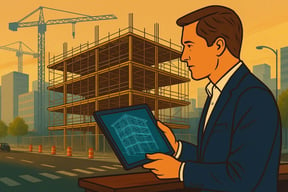
One of the most valuable benefits of VDC for owners is predictability. By linking digital models with schedules (4D), teams can simulate how the project will be built before construction begins. This reveals sequencing conflicts, logistical challenges, and coordination issues early—long before they become costly delays.
When cost data is connected to models (5D), owners can test scenarios and understand budget implications while options are still flexible. This supports better capital planning and reduces the likelihood of late-stage surprises that strain budgets and stakeholder relationships.
Better Oversight During Construction
Integrated technologies also improve transparency during construction. Reality capture tools—such as laser scanning and drone imagery—allow teams to compare work-in-place against the digital model. For owners, this provides clearer visibility into progress, quality, and compliance without relying solely on reports or site visits.
Cloud-based collaboration platforms further support owner oversight by providing access to up-to-date information at any time. Instead of reviewing outdated drawings or disconnected spreadsheets, owners can engage with a shared, accurate source of project data.
Extending Value Beyond Project Delivery

Perhaps most importantly, VDC increasingly supports owners after construction is complete. Accurate digital models (Digital Twins), enriched with asset data, can be transitioned directly into operations and facility management systems. This enables more efficient maintenance planning, better space management, and stronger lifecycle cost control.
By treating the digital model as a long-term asset rather than a temporary construction tool, owners maximize return on investment and establish a foundation for future renovations, expansions, or portfolio-wide planning.
VDC as a Strategic Owner Tool
For owners, VDC is not about adopting every new technology, it is about using integrated tools to support better decisions. Organizations that see the greatest value focus on aligning VDC practices with business goals, procurement strategies, and operational needs.
As integrated technologies continue to advance, VDC is becoming less optional and more essential. Owners who embrace it gain greater certainty, improved collaboration, and higher-performing assets—both during construction and for years afterward.