


Widely used in real estate and municipal planning when evaluating how a new development will block existing scenic, waterfront, or landmark views from adjacent properties. It evaluates the qualitative change in what occupants can see.
View Impact Assessments are performed to verify that proposed construction maintains protected views from adjacent buildings and neighborhoods. These studies establish whether new building elements, particularly roof structures and upper-level additions, exceed allowable height limits that could obstruct existing views from adjacent buildings and homes. By accurately documenting existing site conditions and neighboring structures, the analysis provides a defensible method for demonstrating compliance with view protection requirements.

Theory In Practice
In this example, the ReiSource team prepared an assessment to evaluate the potential for obstructed ocean views. To create the study, a high-resolution LiDAR scan is captured of the existing property, surrounding terrain, and adjacent structures, including the neighboring residence and relevant viewing locations. The point cloud data is imported into Revit to create an accurate 3D representation of the existing conditions. A longitudinal and/or latitudinal section is then generated through the neighbor’s window opening along the primary ocean view corridor. This section allows the existing roof elevation, window elevation, and proposed building elements to be evaluated within the same coordinate system.
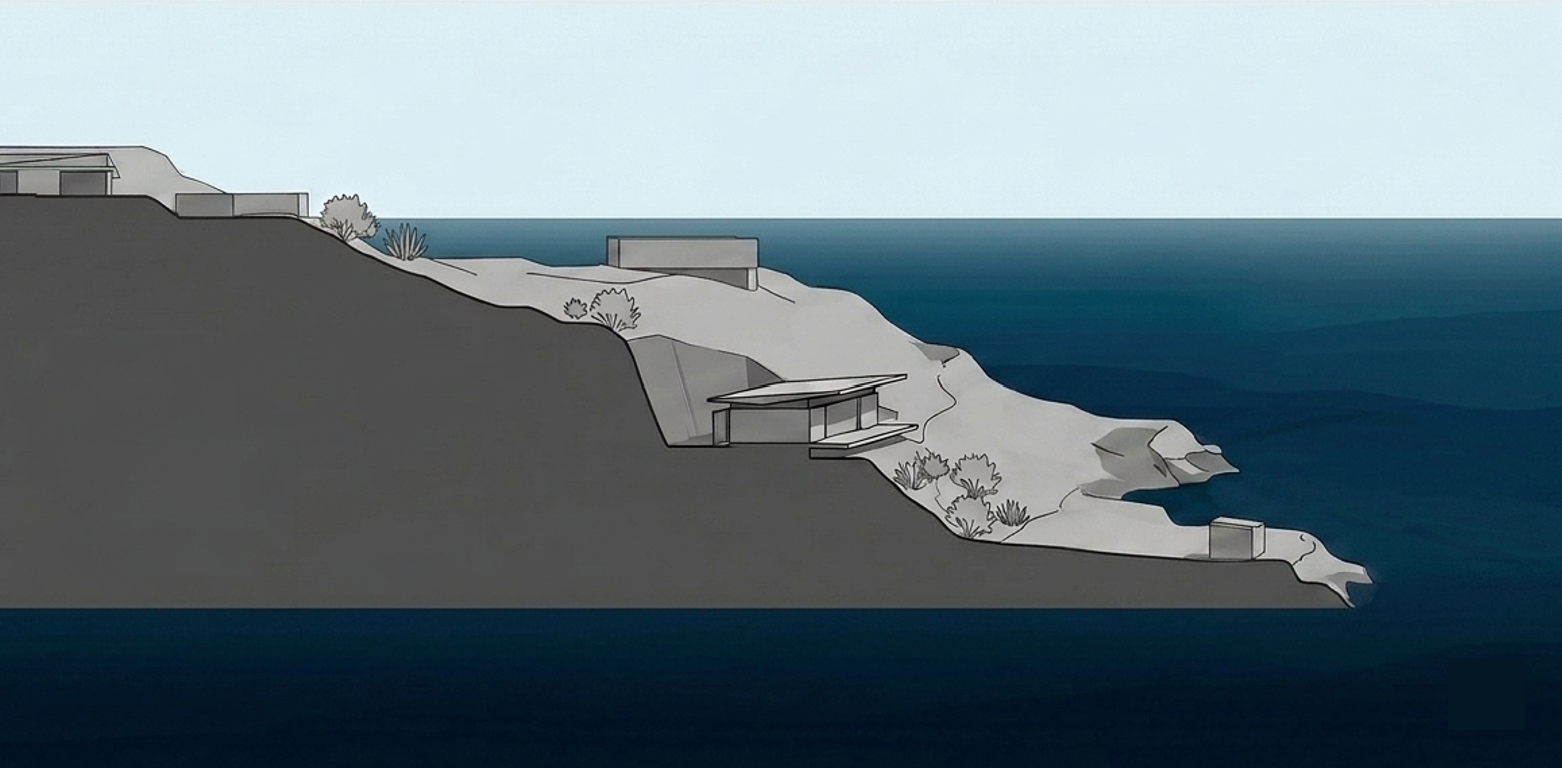
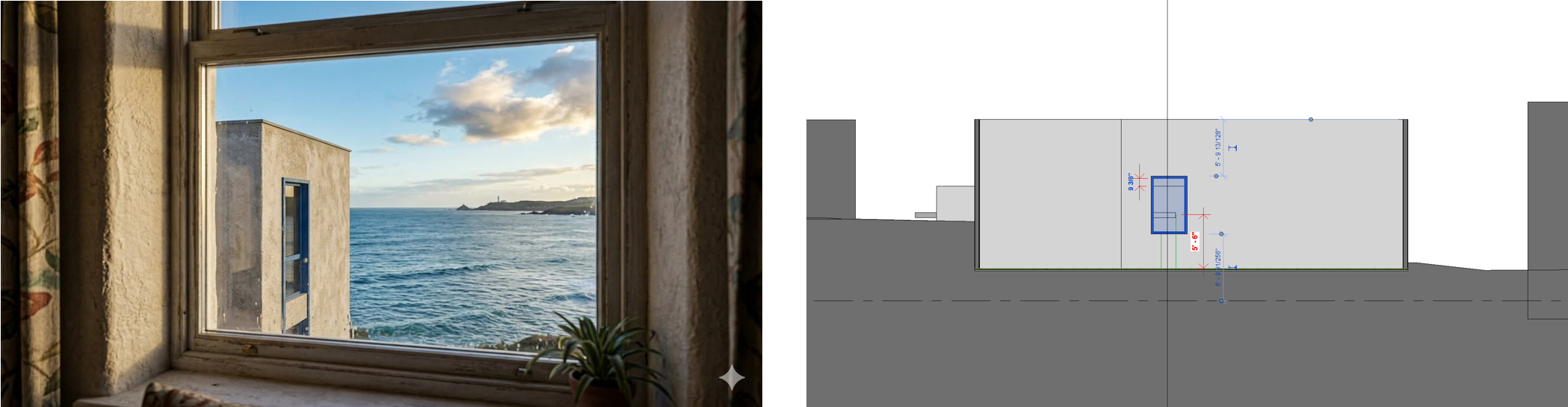
The final analysis documents the vertical relationship between the neighbor’s window and the proposed construction by establishing a measurable dimension from the top of the existing roof plane to the top of the window pane. This same dimension is then carried forward to the proposed design to demonstrate that the required view clearance is maintained. The combination of LiDAR-based existing condition capture and Revit-based modeling provides an accurate, repeatable, and visually clear method for validating Ocean View Deviation compliance.
In Closing
The use of a View Impact Analysis will greatly enhance the ability to ensure compliance with local zoning restrictions. As well, in advance of and design and construction, the analysis can help understand the viability of pursuing a development effort.