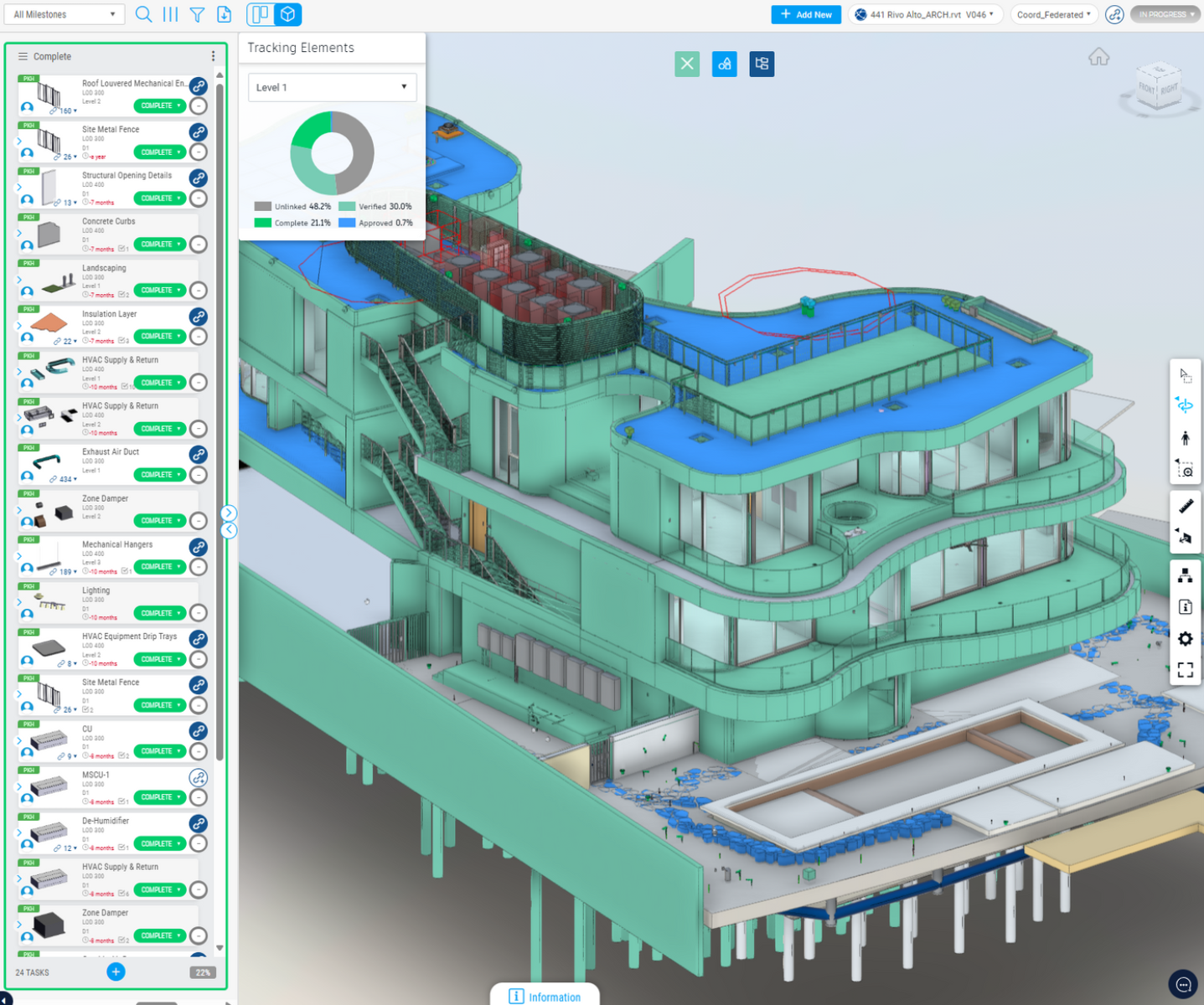

A great example of a technology that has transformed how we deliver BIM project management is Plannerly. It has become a central platform in our workflow, helping us manage scope, align teams, and streamline coordination from project kickoff through closeout. Instead of juggling disconnected systems such as spreadsheets for checklists, emails for updates, PDFs for markups, and separate storage for files, we now consolidate those tasks into one integrated environment.
Why Has It Become Valuable for Us?
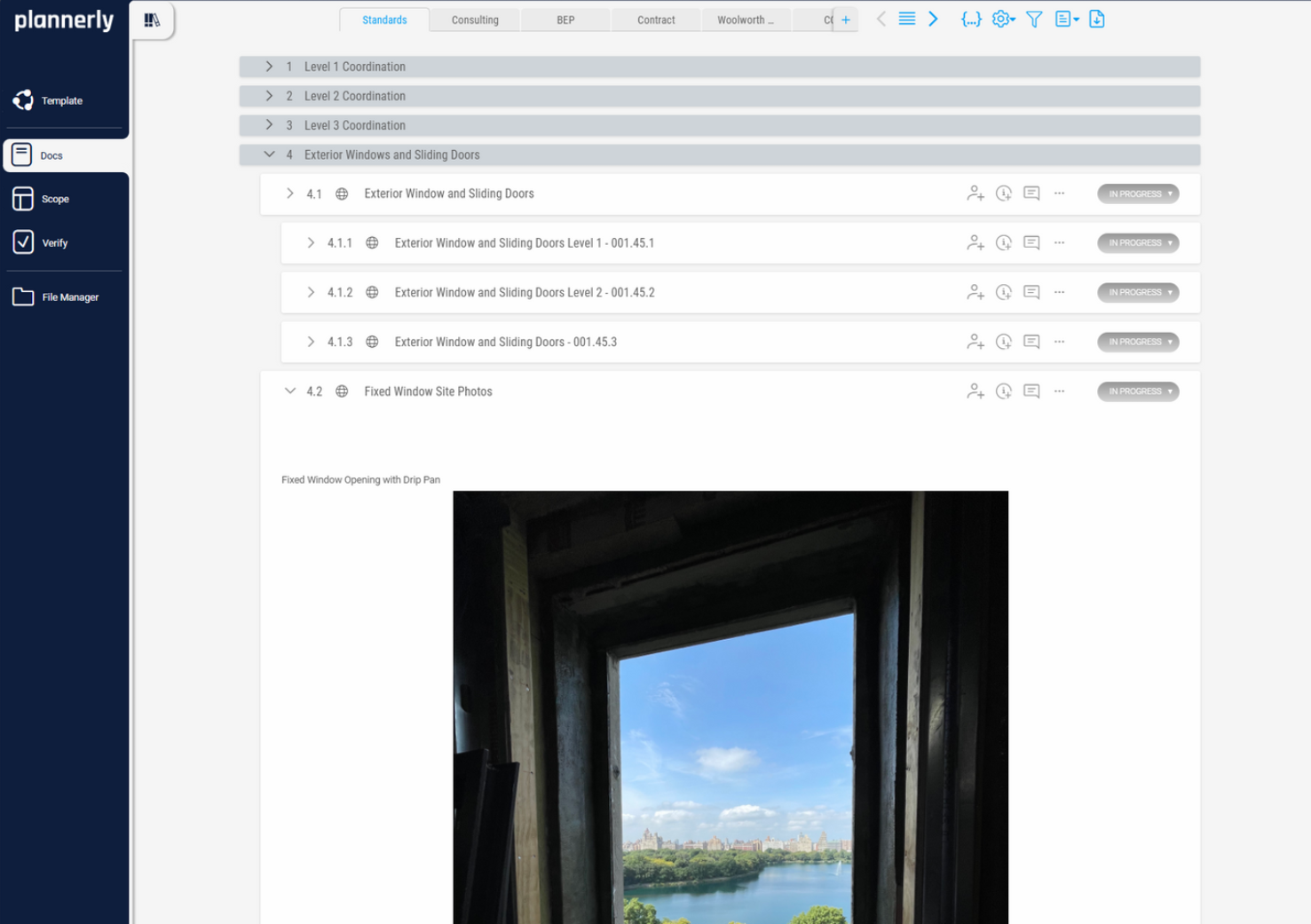
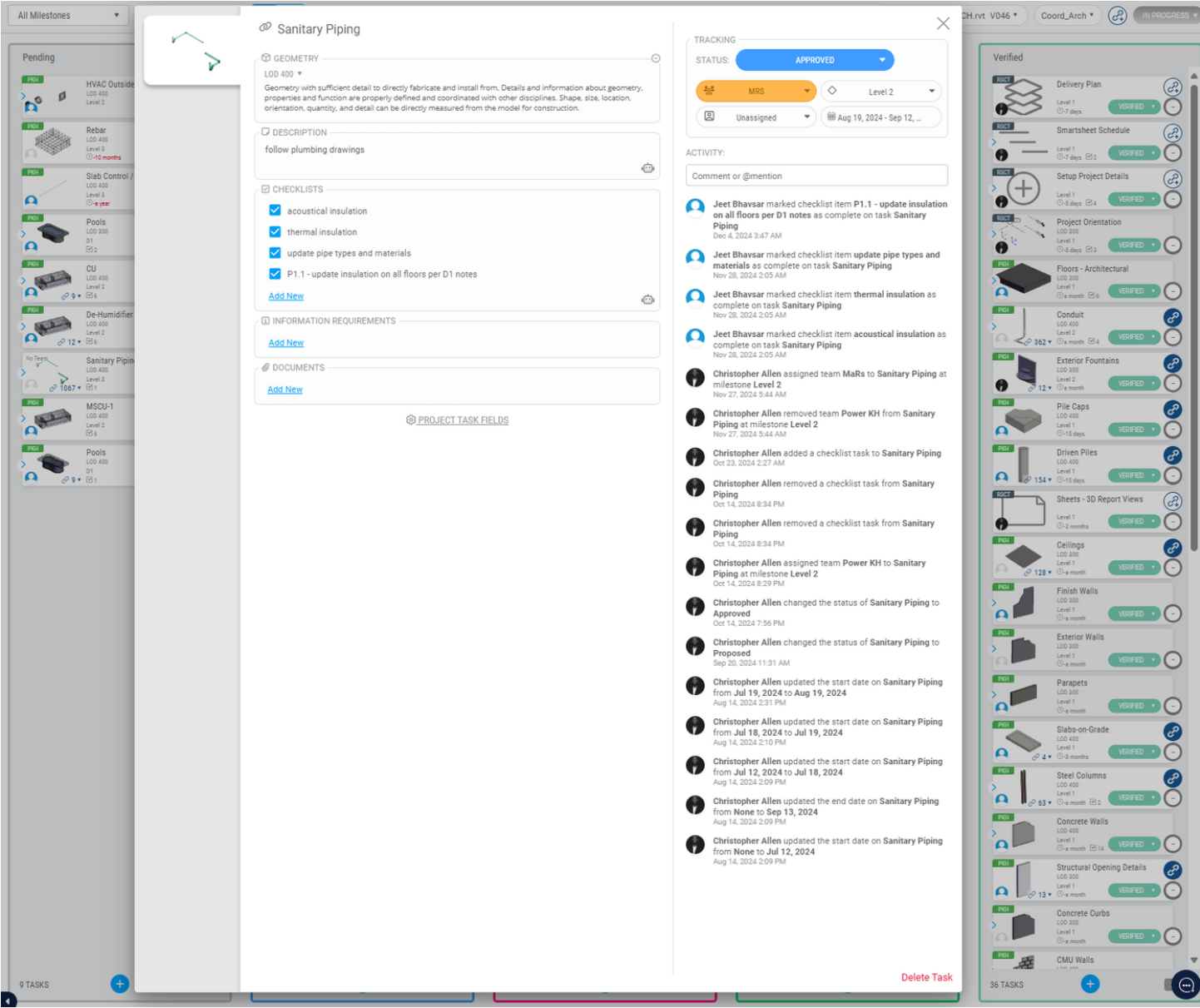
Plannerly allows us to define clear scopes of work, assign responsibilities, and track progress in real time. By embedding deliverables, checklists, and file references directly into tasks, we reduce the noise of chasing emails or searching through shared drives. Everything we do is mapped directly to BIM Execution Plans, proposals, and client expectations. This builds accountability and clarity from the very start.
Visual Management
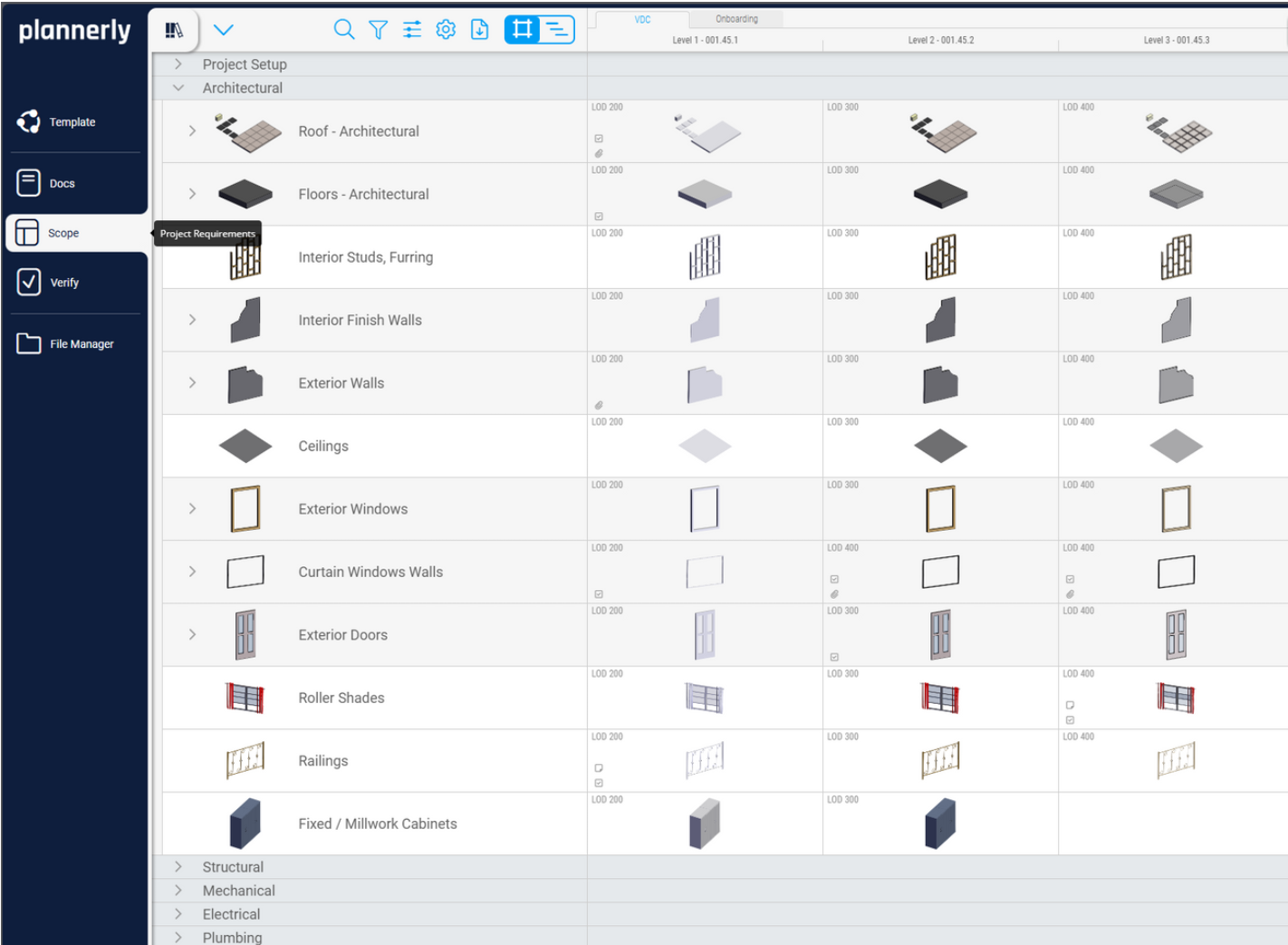
A major advantage of Plannerly lies in its visual management features. Tasks can be broken down by level, discipline, or project phase, and progress can be tracked at a glance. This makes it easy for project managers, coordinators, and even non-technical stakeholders to see exactly where things stand. During coordination meetings, we can highlight bottlenecks early, forecast delivery timelines more accurately, and keep all partners aligned.
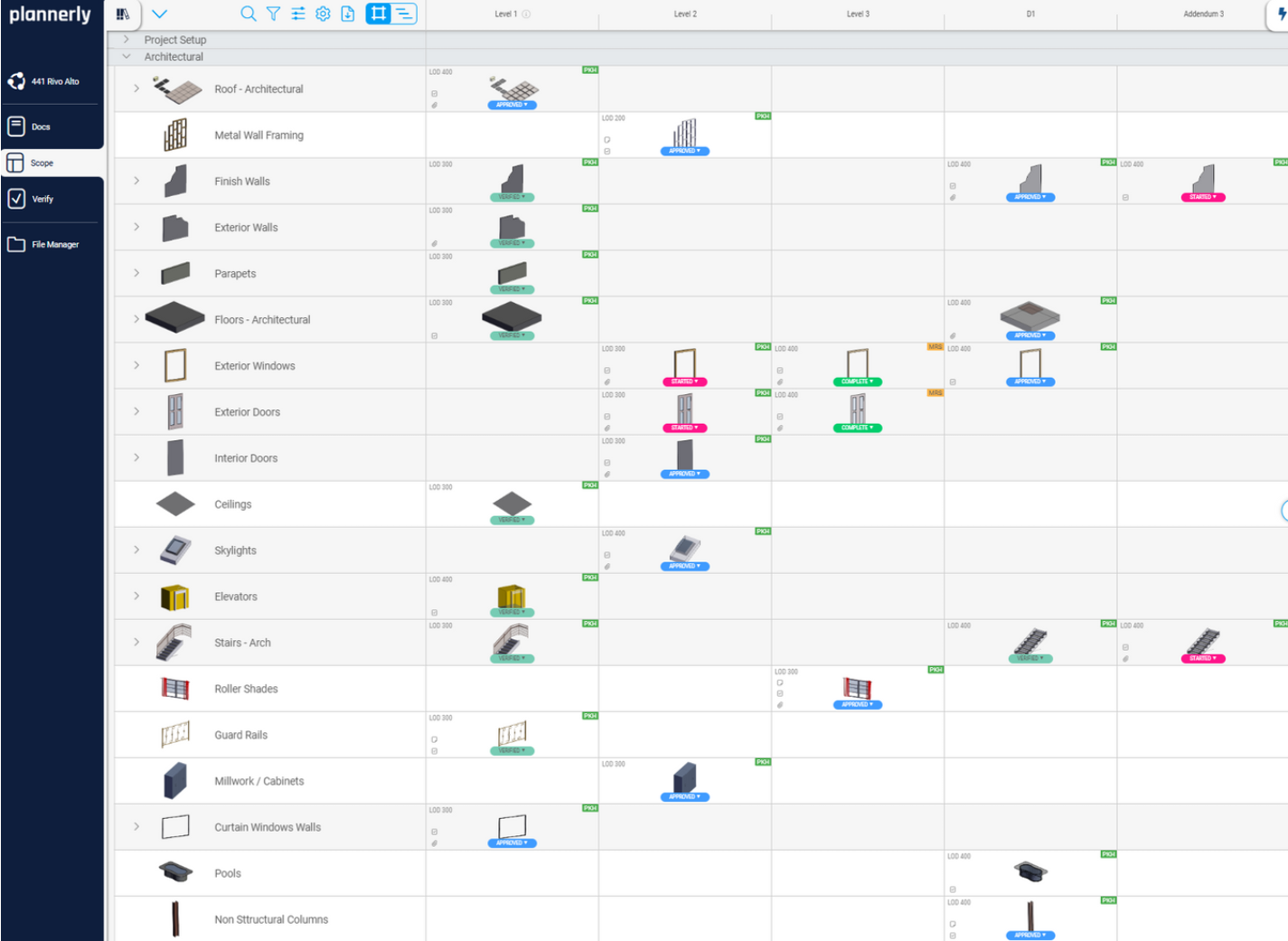
Audit & Estimate Quickly
The platform also improves how we audit models and support estimation. Using 3D filters, teams can quickly isolate elements such as ducts, pipes, or foundations. This makes quantity takeoffs more transparent and reduces the risk of missed details. These labeled views not only enhance internal quality checks but also improve communication with clients and contractors during reviews. This leads to faster and more confident decision-making.
Standardization of Workflows
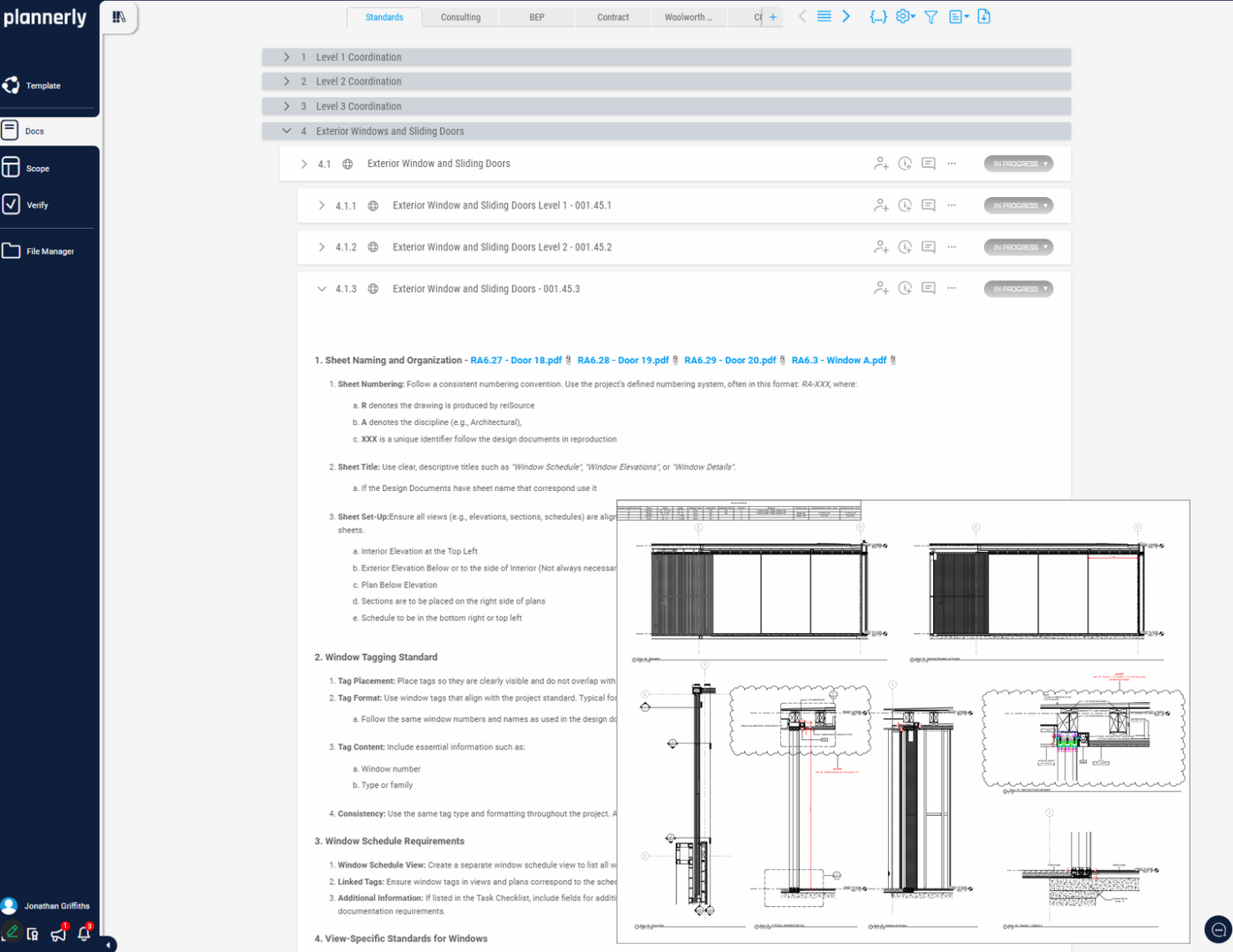
Another key benefit has been the standardization of workflows. With Plannerly, we have built repeatable templates for project setup, Revit family creation, and deliverable tracking. This structure allows us to onboard new team members quickly and ensures consistency across projects. By archiving past projects and reusing proven templates, we continuously refine our approach and carry lessons learned into future work.
Conclusion
Ultimately, adopting Plannerly has shifted our BIM management from reactive coordination to proactive leadership. Instead of spending valuable time formatting documents or reconciling different versions of scope, we now focus on delivering higher-quality models, more efficient coordination, and better project outcomes.