

A review of our success and a look into the future of ReiSource.
Why Are We Still Building Without a Prototype?
Construction has embraced digital design, but much of the industry still builds as if it’s 1985.
Every major manufacturing industry prototypes before production.
Aircraft are digitally assembled before the first rivet is installed.
Automobiles are virtually tested for performance, safety, manufacturability, and serviceability long before a production line begins.
Ships, semiconductor plants, medical devices, and even consumer electronics undergo extensive digital simulation before a single component is fabricated.
Yet construction—an industry responsible for some of the most complex and expensive products ever built—often begins construction with little more than drawings, fragmented coordination, and assumptions.
Somehow, we’ve accepted that discovering problems in the field is simply “part of construction.”
It shouldn’t be.
The Industry Has Changed. Our Process Hasn’t.
Walk into an architectural office in 1985 and compare it to one today.
Forty years ago, buildings were largely rectilinear. Structural systems were predictable. Mechanical systems were comparatively simple. Drawings were produced by hand or with early CAD software, and design complexity was constrained as much by drafting tools as by imagination.
Today, technology has removed many of those limitations.
Architects routinely design free-form geometry, long-span structures, mass timber buildings, double-curved façades, high-performance envelopes, prefabricated assemblies, and highly integrated building systems that would have been nearly impossible to document just a generation ago. Computational design, parametric modeling, and digital fabrication have fundamentally changed what is possible.
Our buildings have evolved. Unfortunately, much of our project delivery process has not.
Construction’s Most Expensive Prototype
Imagine if Boeing built an aircraft without first digitally validating how thousands of systems fit together.
Imagine an automotive manufacturer assembling vehicles while expecting the production line to resolve design conflicts.
It would be unthinkable. Yet in construction, the jobsite often becomes exactly that.
The first time mechanical systems meet structural steel.
The first time ceiling heights are tested against ductwork.
The first time the contractor discovers an existing beam isn’t where the drawings indicated.
The first time trades realize they are competing for the same physical space.
The project itself becomes the prototype.
And prototypes are expensive. Every Request for Information. Every Change Order. Every Schedule Delay. Every Field Modification. Every Overtime Shift. Every piece of rework.
These aren’t simply construction costs. They’re the cost of discovering information too late.
BIM Was Never Meant to Be the Deliverable
For years, Building Information Modeling has often been viewed as another project requirement.
A model to satisfy an owner’s specification. A coordination exercise. A contract deliverable.
But BIM was never supposed to end there. Its true value isn’t the model. Its value is the knowledge created before construction begins.
When properly implemented, a coordinated digital model allows project teams to answer questions before they become problems.
Can it be built?
Can it be maintained?
Can it be prefabricated?
Can it be installed in the planned sequence?
Does the design support the contractor’s means and methods?
Does today’s decision create tomorrow’s conflict?
The model isn’t replacing experience. It amplifies it.
Reality Capture Changes Everything
One of the greatest misconceptions in construction is that drawings represent reality. Anyone who has worked in renovations knows otherwise. Buildings move. Concrete deflects. Steel varies. Walls are rarely where they’re shown. Utilities are abandoned, relocated, or undocumented.
Reality Capture changes the conversation.
LiDAR scanning and photogrammetry create an accurate digital representation of existing conditions before demolition or construction begins.
Instead of designing from assumptions, teams design from reality. Deviation analysis identifies discrepancies before subcontractors fabricate work. Consultants coordinate against verified information.
Contractors bid with greater confidence. Owners experience fewer surprises.
The earlier certainty is introduced into a project, the greater its value.
The Digital Twin Isn’t the Finish Line
Many people think a Digital Twin is something delivered after construction. We believe it begins before construction starts.
Every scan…
Every coordination decision…
Every approved field change…
Every asset…
Every installation…
Becomes part of a living digital record of the facility.
When construction is complete, the owner shouldn’t receive a box of O&M manuals and disconnected PDFs. They should receive an intelligent representation of the building itself. One that supports operations, maintenance, renovations, asset management, and future decision making.
The project ends.
The information continues to create value. Building Smarter
Technology hasn’t replaced craftsmanship. It has elevated it.
The experience of the architect. The judgment of the engineer. The knowledge of the superintendent. The expertise of the trades. None of these become less important because of technology. They become more valuable when supported by better information.
Construction will always require skilled people.
But skilled people deserve better tools.
Perhaps it’s time we stop accepting the jobsite as the first prototype.
Perhaps every building deserves one before construction begins.
About ReiSource
At ReiSource, we help owners, architects, engineers, and contractors bridge the gap between design intent and construction reality through Virtual Design and Construction (VDC), reality capture, BIM coordination, digital twins, construction technology, and project automation.
Because the future of construction isn’t simply about building better.
It’s about building smarter, with greater certainty, before construction begins.
Want to know more?: info@reisourecetech.com
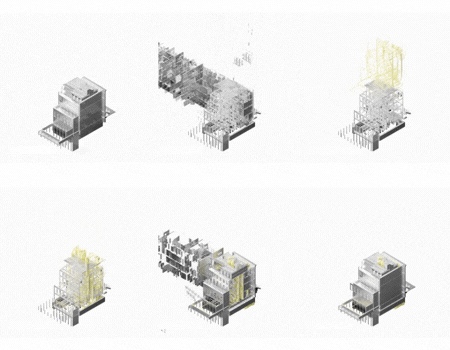
Early Coordination Accelerates Luxury Penthouse Renovation
At ReiSource, we believe the greatest value of Virtual Design and Construction (VDC) isn’t simply detecting clashes, it’s creating opportunities. The earlier project teams can coordinate, validate, and make informed decisions, the greater the impact on schedule, cost, and overall project success.
A recent luxury residential renovation in New York City is a perfect example.
This 10,000 square foot penthouse overlooking Central Park involved a complete gut renovation with an aggressive construction schedule and high expectations for quality. Rather than waiting for the construction documents to be fully completed, ReiSource was engaged during preconstruction to begin developing the coordination model while the design continued to evolve.
Following demolition, our team immediately began coordinating the structural scope using the latest available design information. This early engagement allowed the project team to identify and resolve key structural coordination issues well before they would have impacted the field.
One of the most significant outcomes was the ability to release structural steel for fabrication ahead of the traditional construction timeline. By coordinating steel during design development rather than after permit documents were complete, fabrication began earlier, allowing steel to arrive on site when it was needed instead of becoming a critical path activity.
The benefits extended well beyond the structural package. Early coordination established the digital foundation for subcontractor engagement, enabling project stakeholders to begin reviewing constructability, planning installations, and coordinating field activities sooner than would have been possible using conventional workflows.
Project Highlights
- Complete renovation of a 10,000 square foot luxury penthouse in New York City
- Early VDC engagement during preconstruction before completion of Construction Documents
- Structural coordination initiated immediately following demolition
- Structural steel released early for prefabrication
- Accelerated project schedule through early procurement
- Improved subcontractor coordination and constructability planning
- Reduced potential field conflicts through proactive digital coordination
This project demonstrates that VDC delivers the greatest return when implemented early. By shifting coordination into preconstruction, project teams gain the time needed to make informed decisions before materials are ordered, fabrication begins, and field crews mobilize.
At ReiSource, our goal is to help owners, architects, consultants, and contractors solve problems before they reach the jobsite—creating greater certainty, improved efficiency, and better project outcomes.
Interested in learning how early VDC involvement can accelerate your next project?
We would welcome the opportunity to share this and other project case studies, along with the measurable results our coordination process has delivered across a variety of residential, commercial, and institutional projects.
Contact ReiSource
📧 info@reisourcetech.com

View Impact Assessments are performed to verify that proposed construction maintains protected views from adjacent buildings and neighborhoods.
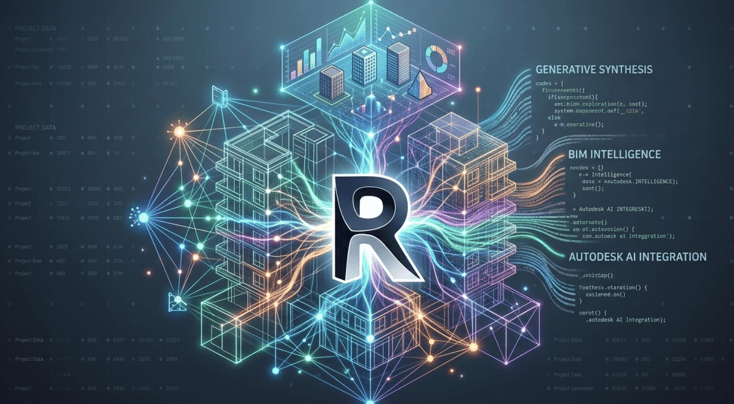
Using AI within Autodesk Revit has evolved beyond being a novelty and is becoming a practical addition to everyday project workflows.
 BIM & VDC Coordination
Our BIM coordination services cover every phase of design and construction, ensuring accurate integration of architecture, structure, MEP, finishes, and prefabrication.
Ask us how: info@reisourcetech.com